
If an existing deck in Everett, Lynnwood, Bothell or a nearby community shows movement, staining or deteriorated components, start with an assessment of the complete structure. The causes of a problem may be below the visible boards, so a replacement plan should address the connections, foundations and water management as well as the finish.
Why Decks Fail in the Pacific Northwest (And How to Build One That Lasts)
If you’ve lived in Northwest Washington for any length of time, you’ve probably seen it: a deck that looks fine from a distance but starts to feel soft underfoot, develops loose railings, or shows signs of rot around the framing.
Most deck failures don’t happen because the decking itself wears out. They happen because moisture finds its way into the structure and slowly damages the parts you can’t see.
The Pacific Northwest presents unique challenges for deck construction. Between heavy rainfall, high humidity, moss growth, and seasonal temperature changes, decks in Snohomish County, North King County and surrounding service areas are exposed to conditions that accelerate deterioration when proper building methods aren’t used.
Understanding why decks fail can help homeowners make better decisions when planning a new deck or evaluating a contractor.
The Biggest Threat: Moisture
Water is the number one enemy of any deck structure.
Even pressure-treated lumber, which is designed to resist decay, is not immune to long-term moisture exposure. When water repeatedly enters screw penetrations, sits on horizontal framing members, or becomes trapped in poorly detailed connections, deterioration eventually follows.
A well-built deck isn’t just about the decking material on top. It’s about managing water throughout the entire structure.
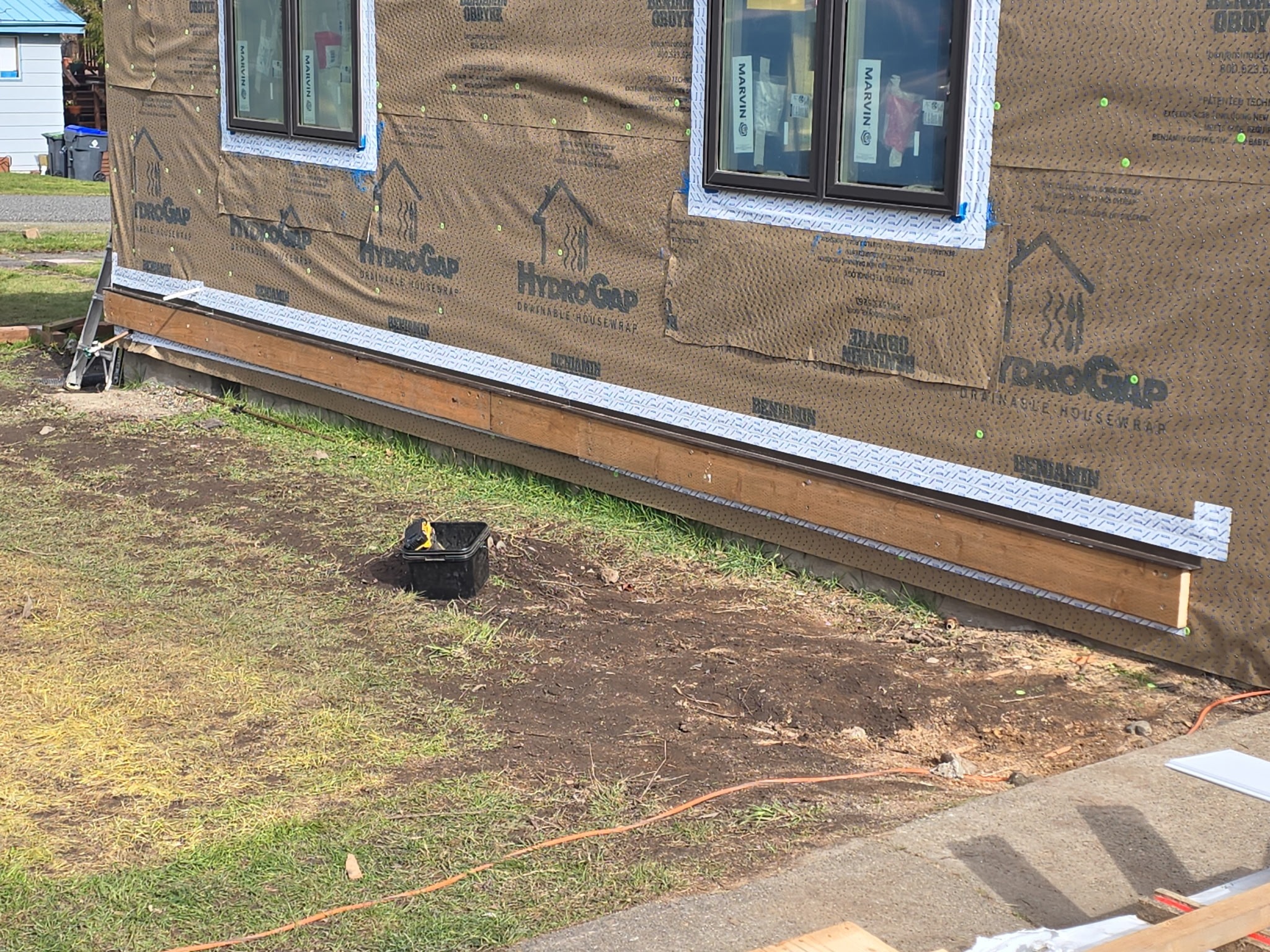
Failure Point #1: Improper Ledger Flashing
The ledger board is one of the most important structural connections on a deck. It attaches the deck framing directly to the house.
When flashing is installed incorrectly—or omitted entirely—water can enter behind the ledger board and damage both the house framing and the deck structure.
This is one of the most common causes of major deck repairs.
Proper flashing should direct water away from the house and prevent moisture from becoming trapped behind the ledger.
Unfortunately, flashing details are often hidden once construction is complete, making it difficult for homeowners to know whether they were installed correctly.
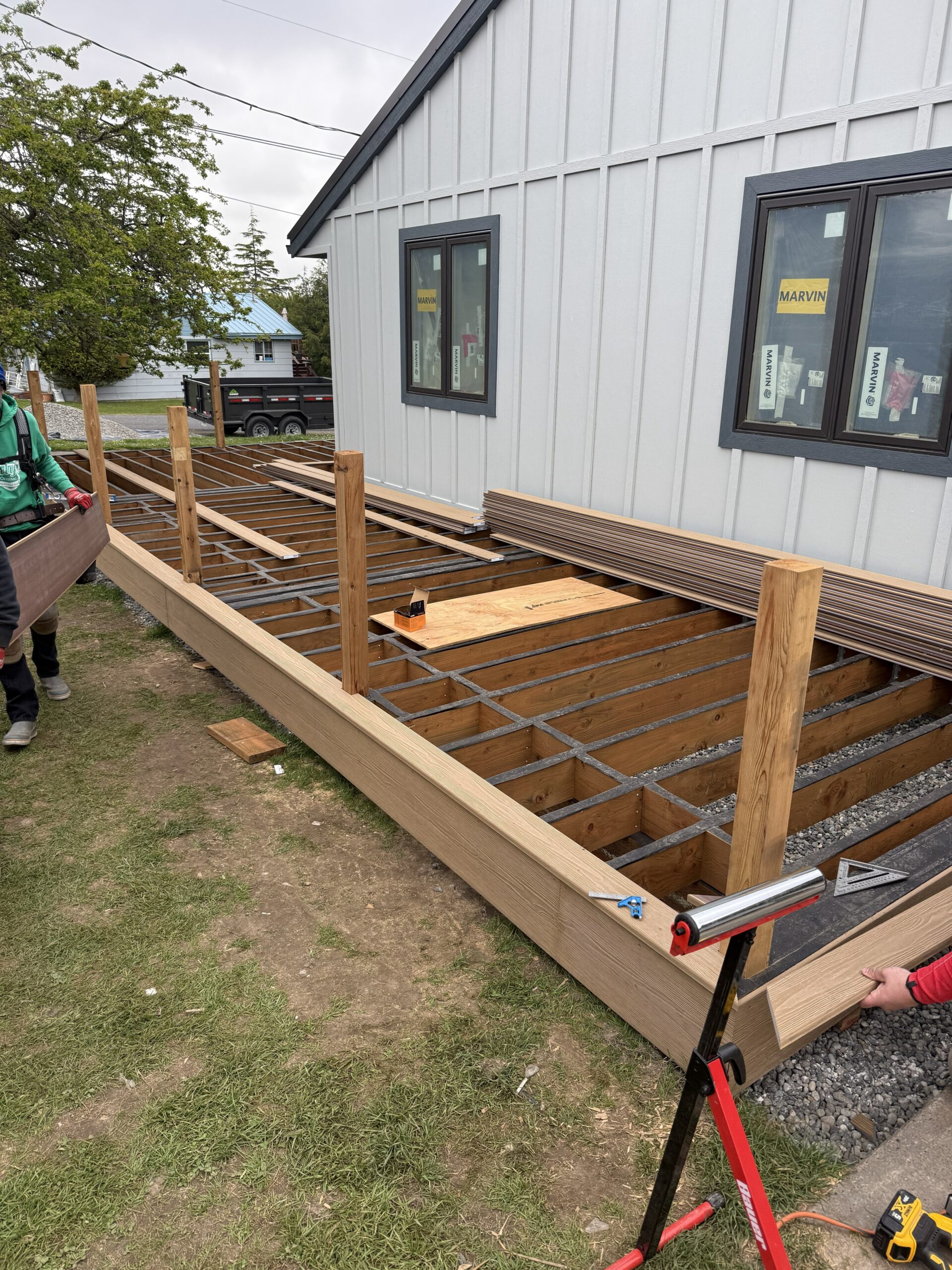
Failure Point #2: Unprotected Joists
Many homeowners are surprised to learn that the tops of deck joists are one of the first places rot develops.
Every deck screw creates a small penetration in the framing. Over time, water can collect around these penetrations and remain trapped between the decking and the framing below.
Joist tape helps protect the framing by creating a waterproof barrier over the top of each joist.
While joist tape adds a small cost during construction, it can significantly extend the life of the framing system—especially in Western Washington’s wet climate.
In our opinion, joist tape should be considered a standard component of any quality deck build.
Failure Point #3: Inadequate Footings
A deck is only as strong as the foundation supporting it.
Undersized footings, improper soil preparation, or poor installation practices can lead to settling, movement, and structural issues over time.
Symptoms of footing problems often include:
- Uneven deck surfaces
- Stair movement
- Doors that no longer align properly
- Visible settling
- Railings that become loose
Proper footing design should account for soil conditions, load requirements, and local building code requirements.
Failure Point #4: Cheap Hardware and Fasteners
Not all deck screws, connectors, and structural hardware are created equal.
In the Pacific Northwest, metal components are constantly exposed to moisture. Inferior fasteners can corrode prematurely, reducing structural integrity and creating staining issues on finished surfaces.
Quality deck construction relies on properly rated structural connectors, corrosion-resistant fasteners, and hardware designed specifically for exterior applications.
The hardware may represent only a small percentage of the project cost, but it plays a critical role in long-term durability.
Failure Point #5: Poor Drainage Design
Water should never be allowed to sit on a deck.
Improper board spacing, inadequate drainage paths, and poor site grading can all contribute to standing water.
Over time, standing water increases the likelihood of:
- Rot
- Mold growth
- Surface staining
- Premature material deterioration
Proper drainage should be considered during the design phase, not as an afterthought.
Failure Point #6: Choosing Materials Based Only on Price
Budget is always an important consideration, but focusing exclusively on initial cost often leads to disappointment.
Different materials perform differently in the Pacific Northwest climate.
Pressure-treated wood can be a cost-effective solution but requires ongoing maintenance.
Composite decking offers excellent durability and low maintenance requirements.
PVC decking provides exceptional moisture resistance because it contains no organic material that can absorb water.
The best material choice depends on the homeowner’s goals, budget, maintenance expectations, and desired lifespan.
What Does a Long-Lasting Deck Look Like?
A deck built for long-term performance typically includes:
- Proper ledger flashing
- Waterproof protection over framing members
- Adequately sized footings
- Corrosion-resistant hardware
- Proper drainage design
- Quality decking materials
- Thoughtful construction details
Many of these features are invisible once the project is complete, but they often determine whether a deck lasts 10 years or 30 years.
Building for Northwest Washington Conditions
The climate in Snohomish County and North King County demands more from a deck than many other parts of the country.
Successful deck construction requires understanding how moisture moves through a structure and taking steps to protect the framing, connections, and materials that support the finished product.
When evaluating deck builders, homeowners should ask about flashing methods, framing protection, fastener selection, and foundation design—not just decking colors and railing options.
The details hidden beneath the surface are often what determine how a deck performs for decades to come.
If you’re planning a new deck in Northwest Washington and want to understand the differences between basic construction and long-term durability, we’re always happy to answer questions and discuss the options available for your project.
Plan a Deck Project in Snohomish County or North King County
Prestige Home Services is based in Burlington and provides deck services throughout Snohomish County and North King County, including Lynnwood, Edmonds, Bothell and other listed communities. Explore our deck service options, review the deck planning checklist, or request a project consultation. Share your city or ZIP code, photos and the changes you want to make so the scope can be reviewed around your home.